
A Los Angeles pothole motorcycle accident can cause serious injuries in seconds. A car may hit a pothole and keep moving. A motorcycle rider does not have that same protection. One deep hole, broken pavement edge, loose asphalt patch, or hidden road defect can throw a rider off balance and cause a violent crash.
This issue matters in 2026 because Los Angeles street conditions remain a major concern for drivers and riders. Heavy rain, aging pavement, patch repairs, traffic volume, and delayed maintenance can all make road hazards worse. For motorcyclists, the danger is simple. Small road defects can create big injuries.
This guide fits well with other topics on this site. Riders may also want to read about California’s Daylighting Law and motorcycle accidents, hit-and-run motorcycle accidents in Los Angeles, what to do after a motorcycle accident in California, and how much a motorcycle accident claim may be worth. A pothole crash can involve all of those legal questions.
The hard part is proving fault. A rider may know the road caused the crash, but insurance companies and public agencies do not accept claims based only on opinion. A strong motorcycle road hazard claim needs photos, timing, location details, witness statements, medical records, and proof that the dangerous condition existed.
Why Los Angeles Pothole Motorcycle Accident Claims Are Different
A Los Angeles pothole motorcycle accident is different from a typical car-versus-motorcycle crash. In many motorcycle crashes, the main question is whether a driver made an unsafe turn, changed lanes, followed too closely, or failed to yield. In a pothole case, the road itself may become the main focus.
That changes the investigation. The claim may involve the City of Los Angeles, Los Angeles County, Caltrans, a contractor, a utility company, or a private property owner. The responsible party depends on where the crash happened and who controlled the road or surface.
For example, a pothole on a city street may involve a different process than a hazard on a state highway. A broken surface inside a private parking lot may involve a property owner instead of a public agency. A road cut left after utility work may point toward a contractor or company.
This is why riders should not assume the case is simple. The legal path depends on ownership, maintenance responsibility, notice, and evidence.
Why Potholes Are So Dangerous for Motorcyclists
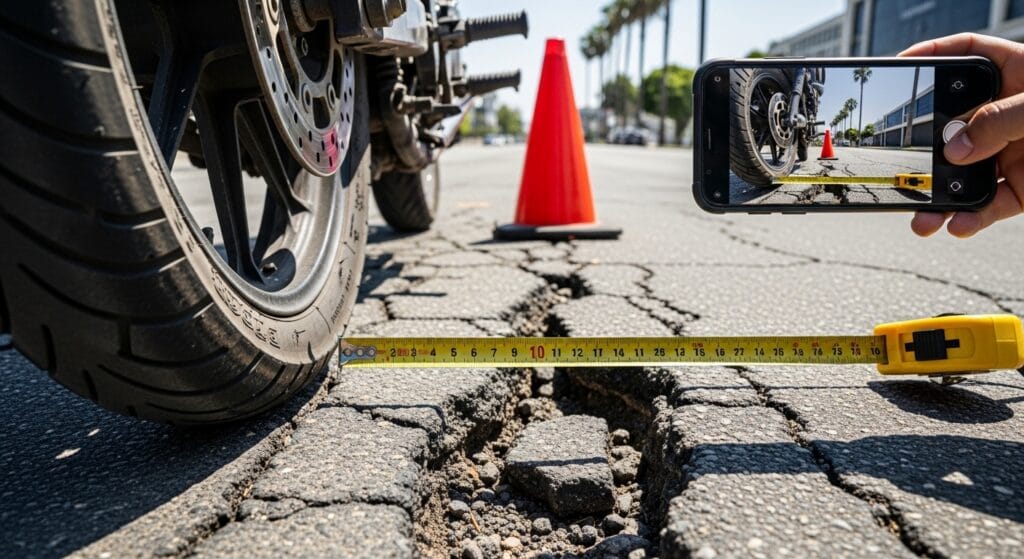
Motorcycles react sharply to road defects. A pothole can bend a rim, damage a tire, lock a wheel, or force the rider into a sudden swerve. The rider may lose control before there is time to recover.
Los Angeles traffic makes the problem worse. Riders may have cars on both sides. They may have little space to avoid a hazard. They may also be traveling through shadows, rainwater, construction zones, or heavy traffic when the pothole appears.
Even a shallow pothole can matter if it sits in a bad location. A defect near an intersection, curve, lane split area, freeway ramp, or downhill street can create more risk. A pothole hidden under water can also become a trap after storms.
Motorcycles have less room for error than cars
A car has four tires, a wider frame, and more stability. A motorcycle has two tires and less contact with the road. That means one bad pavement hit can cause a crash.
Riders can suffer broken bones, head injuries, shoulder injuries, spinal injuries, road rash, knee damage, and dental trauma. Some injuries require surgery or long recovery time. This makes medical documentation very important.
A road defect claim needs more than crash photos
Photos of the motorcycle damage help, but they are not enough. The rider should also document the pothole itself. Take wide photos, close-up photos, and photos that show nearby signs, buildings, lane markings, and intersections.
Use an object for scale if it is safe. A ruler, shoe, water bottle, or phone can help show the size of the hazard. Do not stand in traffic to take photos. Safety comes first.
Who May Be Responsible for a Motorcycle Road Hazard Claim?
A motorcycle road hazard claim depends on control and notice. The injured rider must usually show that a dangerous condition existed and helped cause the crash. The rider may also need to show that the responsible party knew or should have known about the hazard.
In a city street case, the City of Los Angeles may become part of the investigation. In a county road case, Los Angeles County may matter. In a state highway case, Caltrans may matter. On private land, the property owner or business operator may matter.
Contractors can also become important. If a utility crew, road contractor, or construction team created a dangerous patch or failed to secure a work zone, they may share fault. These cases need fast investigation because road conditions can change quickly.
Government claims have strict deadlines
Government claims are deadline-sensitive. The City of Los Angeles explains that claims for death, injury to a person, or injury to personal property must be filed no later than six months after the date of occurrence. Riders can review the official Los Angeles City Attorney claims page for public information about city claim filing timelines.
This is one reason riders should act quickly. Waiting too long can make the claim harder or even block the path to recovery. A normal personal injury timeline may not protect a claim involving a public entity.
What Riders Should Do After a Pothole Motorcycle Crash in Los Angeles
After any crash, medical care comes first. Call 911 if there is head pain, neck pain, back pain, heavy bleeding, confusion, dizziness, or trouble moving. Do not assume the injury is minor because adrenaline can hide pain.
If the rider can safely document the scene, they should do it quickly. Potholes may get filled. Cones may appear later. Water may dry. Debris may move. A repaired pothole can still support a claim, but missing photos can make proof harder.
Police reports also matter. A report can record the crash location, time, injuries, weather, and road condition. If the officer notes the pothole or road defect, that detail can help the claim.
Witnesses can help too. A nearby driver, pedestrian, worker, or business owner may confirm that the pothole existed before the crash. They may also know whether other crashes happened in the same spot.
Evidence That Can Strengthen the Claim

Good evidence tells a clear story. It shows where the rider was traveling, what hazard appeared, how the motorcycle reacted, and what injuries followed. The best evidence connects the road defect to the crash.
Useful evidence may include scene photos, video footage, police reports, medical records, witness names, repair estimates, helmet damage, clothing damage, tow records, 311 reports, and prior complaints about the road.
Riders should also save the damaged motorcycle parts when possible. A bent rim, blown tire, scraped frame, or damaged suspension part can help explain the force of the impact.
Nearby cameras may also matter. Businesses, homes, buses, dashcams, and traffic cameras may capture the crash or the pothole. Video can disappear fast, so early preservation matters.
Report the hazard, but preserve proof first
Los Angeles allows people to report potholes through city services. Reporting the hazard may help prevent another crash. Still, riders should preserve proof first if they can do so safely.
Take photos and notes before the road changes. Write down the exact location, nearest cross street, lane, direction of travel, and time of day. These details help identify the responsible agency and the condition that caused the fall.
A Los Angeles pothole motorcycle accident can become a serious legal case because motorcycles give riders little protection. The road defect may look small to someone in a car, but it can cause life-changing harm to a rider.
The main lesson is clear. Do not rely on memory alone. Document the pothole, get medical care, request a report, save repair records, and act quickly if a public agency may be involved. A strong motorcycle road hazard claim depends on timing and evidence.
Los Angeles riders already deal with traffic, distracted drivers, lane changes, and visibility problems. Dangerous pavement adds another layer of risk. When a poorly maintained road causes a crash, the injured rider should understand the legal options and protect the evidence before it disappears.