
Motorcycle Safety Awareness Month is a useful reminder for Los Angeles riders in 2026. It is not only about telling drivers to look twice. It is also about helping riders protect themselves before, during, and after a crash. In a busy city like Los Angeles, visibility, gear, road awareness, and documentation can all affect safety and injury claims.
Motorcyclists face risks that car drivers do not face in the same way. A driver inside a vehicle has doors, airbags, seat belts, and a larger frame. A motorcycle rider has less physical protection. That means one careless turn, unsafe lane change, sudden stop, or distracted driver can cause serious injuries.
This topic connects well with other guides on this site. Riders may also want to read about California’s Daylighting Law and motorcycle accidents, hit-and-run motorcycle accidents in Los Angeles, what to do after a motorcycle accident in California, and how much a motorcycle accident claim may be worth. Safety and legal evidence often overlap after a crash.
The main lesson is simple. Safe riding habits can reduce risk, but they can also help protect a legal claim. Helmet use, reflective gear, dashcam footage, crash photos, medical records, and witness statements may all become important. Strong motorcycle accident evidence can help show what happened and why the rider deserves compensation.
Why Motorcycle Safety Awareness Month Matters in Los Angeles
Motorcycle Safety Awareness Month matters in Los Angeles because riders share the road with heavy traffic, distracted drivers, buses, delivery vans, rideshare vehicles, tourists, and commuters. Many crashes happen because another driver claims they did not see the motorcycle. That excuse is common, but it does not always remove liability.
Los Angeles roads also create unique hazards. Riders may deal with tight lanes, freeway merges, left-turn traffic, construction zones, potholes, faded lane markings, and sudden stops. A rider must often make quick decisions with very little room for error.
Safety campaigns can help remind drivers to check mirrors, blind spots, and intersections. But riders should not depend on driver attention alone. The better approach is defensive planning. Riders should make themselves more visible, manage space carefully, and prepare for careless drivers.
For official safety campaign timing, readers can review the California Office of Traffic Safety campaign calendar. It lists National Motorcycle Safety Awareness Month for May 2026.
Visibility Can Affect Both Safety and Liability
Visibility is one of the biggest issues in motorcycle crashes. A driver may turn left in front of a motorcycle. A rideshare driver may pull from the curb without checking. A commuter may change lanes and sideswipe a rider. In each case, the driver may later say the motorcycle appeared “out of nowhere.”
That statement can become part of the claim. The rider’s attorney may look at lighting, speed, lane position, traffic signals, witness statements, and driver attention. The goal is to show whether the driver should have seen the rider with reasonable care.
Bright gear and lights can help counter the “I did not see them” defense
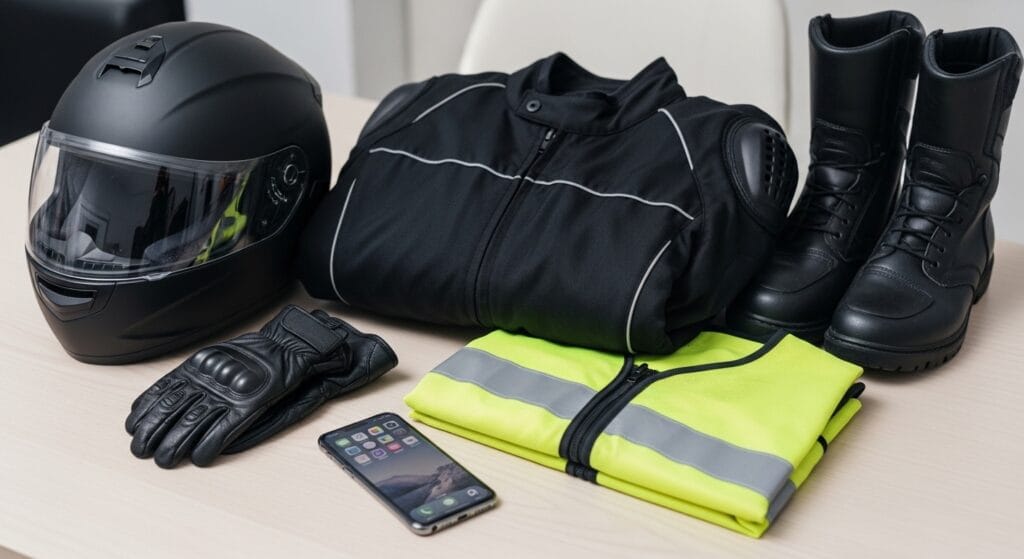
Riders can help protect themselves by using working headlights, brake lights, turn signals, and reflective gear. Bright colors can also help during daytime traffic. These steps do not guarantee safety, but they can reduce the chance that a driver overlooks the rider.
They can also support the claim later. If a rider wore visible gear and used proper lights, it becomes harder for the other side to blame the rider for being hard to see. Photos of gear, lights, and the motorcycle can help prove this point.
Lane position can make a rider easier or harder to notice
Lane position matters. A rider hidden behind a large vehicle may be harder to see. A rider too close to a blind spot may face more risk. A rider who gives drivers more time to notice them may have a better safety margin.
After a crash, lane position can also matter for liability. Photos, dashcam footage, road markings, and witness statements may help show where the motorcycle was before impact. This is one reason scene documentation is important.
Protective Gear Can Become Injury Evidence
Protective gear does more than reduce injury risk. It can also become evidence after a crash. A damaged helmet, torn jacket, scraped gloves, cracked boots, or ripped riding pants can show the force and direction of impact.
Riders should not throw damaged gear away too quickly. The gear may help explain how the crash happened and why the injuries are serious. It may also show that the rider took safety seriously.
Medical evidence is still the most important injury proof. Doctors, imaging results, treatment notes, surgery records, therapy records, and pain reports can help connect the injuries to the crash. Gear damage can support that story.
How Riders Can Build Strong Motorcycle Accident Evidence
After a Los Angeles motorcycle crash, evidence can disappear quickly. Vehicles move. Debris gets cleared. Cameras overwrite footage. Witnesses leave. Road hazards may get repaired. That is why riders should document the scene as soon as it is safe.
Medical care comes first. A rider should call 911 after any serious crash. Head pain, neck pain, back pain, dizziness, confusion, bleeding, numbness, or trouble walking needs immediate attention. A rider should not ignore symptoms because adrenaline can hide pain.
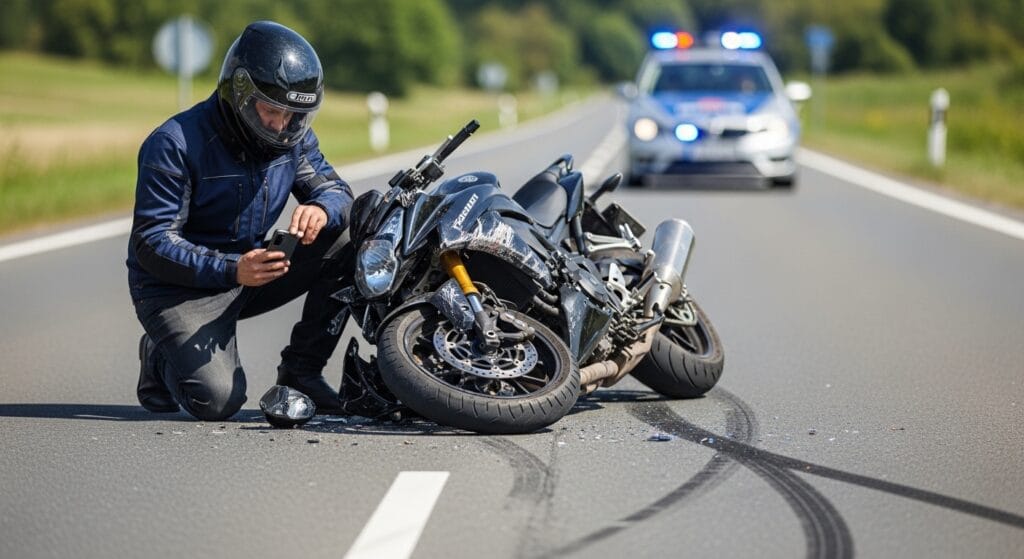
If the rider can safely gather information, photos and videos can help. Take pictures of the motorcycle, other vehicles, license plates, road marks, traffic signals, skid marks, debris, injuries, helmet damage, and weather conditions. Wide photos and close-up photos both matter.
Witness information can also help. A neutral witness may confirm that a driver turned left, changed lanes, ran a light, opened a door, or failed to yield. Witnesses can be especially useful when the driver denies fault.
What to Document After a Los Angeles Motorcycle Crash
Start with the crash location. Write down the street, cross street, lane, direction of travel, and nearby landmarks. If the crash happened near a driveway, parking lot, freeway ramp, or intersection, note that detail.
Next, document the motorcycle. Take photos of tire marks, broken parts, bent forks, scratched fairings, damaged lights, and impact areas. These details can help explain the mechanics of the crash.
Also document the rider’s gear. Keep the helmet, gloves, jacket, pants, boots, and any damaged personal items. Do not repair or discard them until the claim is reviewed.
Dashcam and helmet camera footage can be powerful
Video can be some of the strongest motorcycle accident evidence. A helmet camera, motorcycle dashcam, nearby business camera, bus camera, or vehicle dashcam may show the crash clearly. It may also show driver behavior before impact.
Video should be saved right away. Memory cards can overwrite old clips. Businesses may delete security footage after a short time. Riders or family members should request preservation as soon as possible.
Medical records connect the crash to the injury claim
Medical records help prove damages. They show what injuries happened, what treatment was needed, and how the crash affected the rider’s life. Delayed treatment can create problems because insurance companies may argue the injury came from something else.
Riders should follow medical advice, attend follow-up visits, and keep therapy appointments. They should also save bills, prescriptions, work notes, and out-of-pocket expenses. These records can affect the final value of the claim.
The bottom line is clear. Motorcycle Safety Awareness Month should not be treated as a simple calendar event. For Los Angeles riders, it is a chance to improve visibility, check gear, review road habits, and prepare for what to do if a crash happens.
Drivers must share the road with motorcyclists. Riders can also protect themselves by staying visible, using proper gear, documenting hazards, and saving evidence after a collision. Safety habits and legal evidence often work together.
If a crash happens, do not rely on memory alone. Get medical care, preserve damaged gear, photograph the scene, collect witness information, and keep records. A strong legal claim depends on clear facts. The sooner a rider protects those facts, the stronger the case may become.