
Autonomous vehicle motorcycle accidents are becoming a serious legal topic in Los Angeles in 2026 because driverless cars, robotaxis, advanced driver-assistance systems, and automated vehicle testing are no longer distant ideas. They are part of the modern traffic environment. For motorcycle riders, that creates a new kind of crash question: what happens when a motorcycle collision involves a vehicle controlled partly or fully by technology?
Motorcycle riders already face major risks in Los Angeles traffic. Cars change lanes suddenly, drivers make unsafe left turns, road surfaces can be rough, and heavy congestion leaves little room for error. When autonomous vehicle technology enters that environment, the evidence can become more complex. Instead of only asking what the human driver saw, a claim may involve sensors, cameras, software decisions, remote support, vehicle data, company records, and whether the automated driving system recognized the motorcycle properly.
This does not mean every autonomous vehicle is unsafe. It means riders need to understand that an accident involving an automated vehicle may require a different investigation than a typical car-versus-motorcycle crash. The evidence may be digital, technical, and controlled by companies that have strong legal teams. Injured riders should not assume the claim will be simple just because the crash scene looks ordinary.
Why Autonomous Vehicle Motorcycle Accidents Matter in Los Angeles
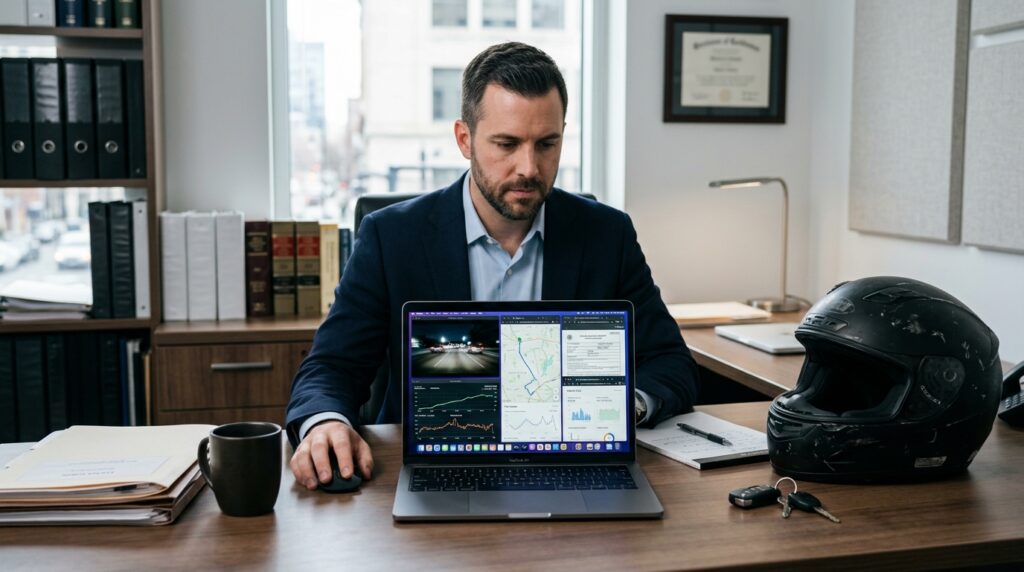
Los Angeles is one of the most complicated traffic environments in the country. Motorcycles share space with commuters, delivery vehicles, buses, rideshare cars, electric bikes, scooters, tourists, commercial trucks, and now more vehicles with advanced automation features. For riders, the key issue is visibility. Motorcycles are smaller than passenger cars, move differently, and may be harder for drivers or systems to detect in crowded traffic.
Autonomous vehicle crash claims matter because the technology may change how fault is investigated. In an ordinary crash, a lawyer may focus on driver behavior, speed, traffic signals, witness statements, police reports, and road conditions. In an autonomous vehicle case, the investigation may also ask whether the vehicle’s sensors detected the motorcycle, how the software classified the motorcycle, whether the system predicted the rider’s movement, and whether the vehicle made a safe decision.
For riders injured in a crash, these questions can affect compensation. A claim may involve the vehicle owner, vehicle operator, autonomous vehicle company, software provider, fleet operator, maintenance company, remote assistance team, or another negligent driver. The more complex the technology, the more important it becomes to preserve evidence early.
New California rules make AV evidence more important in 2026
California’s 2026 public safety updates show that autonomous vehicles are becoming a bigger part of road regulation. New rules address how certain autonomous vehicles interact with first responders and how automated driving system activity may be identified. For motorcycle riders, this matters because a crash scene involving an autonomous vehicle may include questions about whether the vehicle was operating manually, under driver assistance, or through an automated driving system.
That status can shape the entire claim. If a human driver was controlling the vehicle, the case may look more like a traditional negligence claim. If the automated driving system was active, the investigation may need to examine vehicle data, company logs, and system behavior. Remote support was involved, the timing and role of that support may matter too.
Motorcycle riders should understand that the label “self-driving” can be misleading. Some vehicles have driver-assistance features, while others may operate without a human driver in certain conditions. The legal investigation should identify the actual operating mode at the time of the crash, not rely on marketing language.
Driverless vehicle status and ADS marker lamps
One important 2026 issue is whether a vehicle’s automated driving system was active. California has recognized automated driving system marker lamps, which can help notify others when an AV’s automated system is activated. In a crash claim, that detail may become relevant if witnesses saw lights, indicators, or unusual vehicle behavior before impact.
However, riders should not rely only on what they remember seeing. A crash happens fast. A motorcycle rider may be focused on braking, avoiding impact, or surviving the collision. That is why photos, nearby cameras, dashcam footage, police reports, and vehicle data are so important. They can help show whether the vehicle was operating under automation and how it behaved before the crash.
Remote support and first responder communication
California’s 2026 rules also highlight communication between autonomous vehicles and first responders. That matters because a driverless crash scene may be confusing. If there is no human driver in the vehicle, police, firefighters, paramedics, and injured riders may need to know how to stop the vehicle, contact support, or document what happened.
For injury claims, the timeline after the crash can become evidence. Did the vehicle stop immediately? Did remote support communicate with responders? Was the vehicle moved? Was data preserved? Were photos taken before the scene changed? These questions may help determine whether important evidence was protected or lost.
Common crash scenarios involving motorcycles and automated vehicles
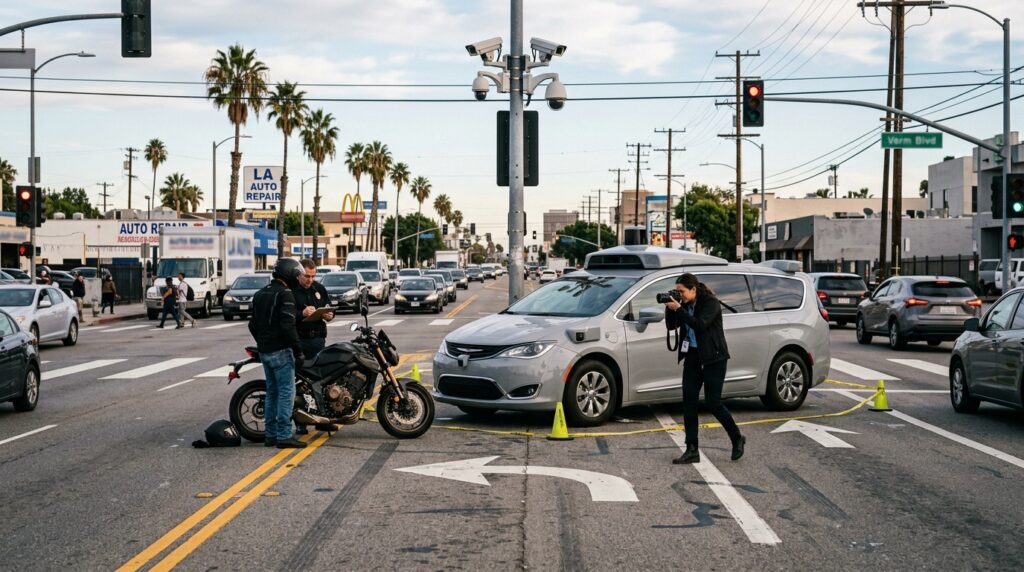
Autonomous vehicle motorcycle accidents may happen in several ways. One common scenario is an intersection crash. A motorcycle may be traveling straight when a vehicle turns left, rolls forward, or misjudges the rider’s speed. This overlaps with the site’s guide on left-turn motorcycle accident claims in Los Angeles, where visibility and intersection evidence are already major issues.
Another scenario is a lane-change or merge crash. Motorcycles can be missed in blind spots, especially in heavy traffic. If an automated vehicle changes lanes or drifts near a rider, the case may involve sensor coverage, lane detection, object classification, and whether the system gave enough space. A third scenario is sudden braking. If an autonomous vehicle stops unexpectedly and a motorcycle rider is forced into an emergency reaction, fault may depend on following distance, traffic flow, vehicle behavior, and whether the stop was reasonable.
Road hazards can also complicate the case. Motorcycles are more sensitive to potholes, debris, uneven pavement, construction plates, and lane grooves. If an automated vehicle reacts to a road hazard in a way that affects a nearby rider, both technology and roadway conditions may need review. Riders should also read the site’s guide on Los Angeles pothole motorcycle accident claims in 2026.
Preserve video and sensor-adjacent evidence quickly
Video evidence can be extremely valuable in an autonomous vehicle motorcycle accident. A rider’s helmet camera, motorcycle-mounted camera, vehicle dashcam, nearby business camera, traffic camera, or witness phone video may show the vehicle’s movement before impact. That can be critical if the autonomous vehicle company later disputes what happened.
The site’s article on motorcycle dashcam and helmet camera evidence in 2026 is especially relevant here. Video can help prove lane position, signal timing, braking, speed, visibility, and whether the rider had time to react.
How Injured Riders Can Protect an Autonomous Vehicle Crash Claim
After a motorcycle crash involving an autonomous vehicle or advanced driver-assistance technology, the first priority is medical care. Riders should call emergency services, get evaluated, and follow treatment instructions. Even if the injury feels manageable at first, symptoms like concussion, neck pain, back pain, internal injuries, shoulder trauma, knee injuries, or nerve pain may become worse later.
The second priority is evidence. Injured riders should photograph the scene, vehicle damage, motorcycle damage, road conditions, lane markings, traffic lights, skid marks, debris, cameras, and any visible technology features on the vehicle. If possible, they should identify witnesses and ask whether anyone recorded video.
Riders should also be careful with insurance statements. An automated vehicle crash may involve several companies, and each may try to limit responsibility. Do not guess about the vehicle’s technology, speed, or operating mode. Stick to facts. The investigation should uncover whether automation was active and what records exist.
Liability may involve more than one company
Liability in an autonomous vehicle motorcycle accident may not stop with the vehicle owner. Depending on the facts, the claim may involve the AV operator, fleet owner, manufacturer, software company, maintenance provider, mapping provider, remote support contractor, or another driver. If the crash happened during a rideshare or delivery operation, commercial coverage may also become an issue.
Insurance limits and available coverage still matter. Riders should review the site’s guide on California’s new auto insurance limits in 2026 because serious motorcycle injuries can exceed minimum coverage. If the crash involves a company-owned autonomous vehicle, there may be different insurance questions than in a private passenger vehicle case.
Speed allegations may also appear. Even when another vehicle causes the crash, an insurance company may argue that the motorcycle rider was traveling too fast. The site’s article on speeding motorcycle accidents in Los Angeles can help riders understand how speed disputes affect liability.
Do not assume the AV company will admit fault
Injured riders should not assume an autonomous vehicle company will automatically accept responsibility. Companies may argue that the motorcycle was speeding, lane splitting unsafely, outside the expected path, difficult to detect, or affected by another vehicle’s actions. They may also argue that the system acted reasonably based on available data.
That is why independent evidence matters. Medical records, scene photos, helmet camera footage, witness statements, police reports, repair estimates, expert analysis, and preserved vehicle data can all help balance the claim. The rider should not rely only on the company’s internal explanation of what happened.
Electric motorcycles can create even more confusion because insurers and companies may question classification, speed capability, licensing, or vehicle status. Riders using electric motorcycles or high-powered two-wheel vehicles should also read e-motorcycle accidents in Los Angeles.
For official background on automated vehicle safety, readers can review the NHTSA automated vehicle safety resource. It explains automated driving systems and why vehicle automation remains an active safety issue.
The bottom line is straightforward. Autonomous vehicle motorcycle accidents in Los Angeles require fast evidence preservation, careful legal analysis, and a clear understanding of how technology changes the claim. A motorcycle rider may be dealing with more than one driver, more than one company, and more than one source of data. The crash may look simple from the street, but the evidence behind it may be highly technical.
Riders should protect themselves by getting medical care, documenting the scene, saving video, avoiding guesses, and identifying every possible responsible party. As automated vehicles become more common in Los Angeles traffic, motorcycle riders need to know that visibility, data, software behavior, and insurance coverage may all shape the outcome of a crash claim.