
California auto insurance limits in 2026 matter for every Los Angeles motorcycle accident claim because the minimum liability coverage available after a crash is no longer the same as it used to be. For years, many injured riders faced the harsh reality that the at-fault driver carried only very low insurance limits. A serious motorcycle crash could create hospital bills, surgery costs, lost wages, motorcycle damage, and long-term pain far beyond the available policy.
California’s minimum liability insurance requirements are now higher, but that does not mean injured motorcyclists are fully protected. A motorcycle accident can still cause injuries worth far more than a minimum policy. Riders may need to look closely at liability insurance, underinsured motorist coverage, uninsured motorist coverage, health insurance, medical liens, property damage, and every possible source of compensation.
This guide explains how the current California insurance limits affect Los Angeles motorcycle crash claims in 2026, why minimum coverage may still be too low for serious injuries, and what evidence riders should preserve before speaking too much with insurance companies.
Why California Auto Insurance Limits Matter After a Motorcycle Crash
California requires drivers to carry liability insurance for injuries and property damage they cause to others. According to the California DMV, the current minimum liability insurance requirements for private passenger vehicles are $30,000 for injury or death to one person, $60,000 for injury or death to more than one person, and $15,000 for property damage. Riders should understand what those numbers mean before assuming there will be enough money to cover a claim.
If a driver hits a motorcyclist and carries only the minimum policy, the injured rider may be dealing with a limited insurance pool. A $30,000 bodily injury limit may sound helpful, but motorcycle injuries can become expensive very quickly. Emergency transportation, imaging, surgery, orthopedic treatment, pain management, physical therapy, lost income, and future medical needs can easily exceed that amount.
The same is true for property damage. A damaged motorcycle, riding gear, helmet, phone, accessories, towing, and storage fees can create losses that push past basic property coverage. A rider with a newer motorcycle or custom equipment may find that minimum property damage coverage does not fully solve the problem.
The new limits help, but they do not guarantee full compensation
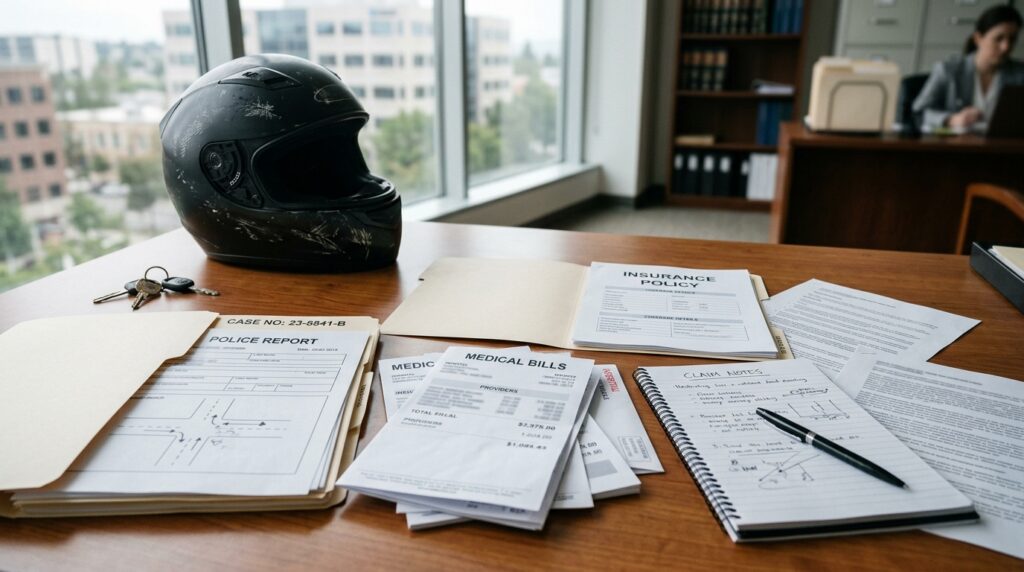
Higher insurance minimums are better than the old lower limits, but they are not a complete safety net. Motorcycle crashes often involve more severe injuries than ordinary car collisions because riders do not have a vehicle frame, airbags, or seat belts protecting them. Even a moderate-speed crash can lead to broken bones, road rash, shoulder injuries, knee injuries, spinal trauma, concussion symptoms, nerve damage, or permanent limitations.
That is why insurance limits should be viewed as the beginning of the claim analysis, not the end. If the at-fault driver has only minimum coverage, the rider may need to evaluate whether other policies or parties are available. This may include the rider’s own underinsured motorist coverage, another negligent driver, a commercial vehicle policy, a rideshare or delivery policy, a defective vehicle claim, or a public entity claim if unsafe road conditions contributed to the crash.
For riders dealing with serious injuries and disputed fault, the site’s article on why hiring auto accident lawyers matters after a car or motorcycle crash is a useful related guide. Insurance companies do not automatically pay the full value of a claim just because the injuries are real.
Minimum coverage can run out fast in serious injury cases
Minimum coverage can disappear quickly when more than one person is injured. If a motorcycle rider and passenger are both hurt, the per-accident limit may need to be divided between multiple claims. If several vehicles are involved, coverage disputes can become even more complicated.
In serious motorcycle cases, the question is not only whether insurance exists. The question is whether the available limits are enough to cover the real damages. If they are not, the rider should avoid rushing into a settlement without understanding what rights may be waived. Once a release is signed, it can be very difficult or impossible to reopen the claim later.
Property damage is separate from bodily injury coverage
Riders should also separate injury compensation from motorcycle damage. Property damage coverage generally addresses the motorcycle and other physical property, while bodily injury coverage addresses medical costs, lost wages, pain, and related injury damages. These are different parts of the claim.
After a crash, riders should photograph the motorcycle before repairs, save repair estimates, document towing and storage charges, and keep proof of damaged gear. Helmets, jackets, gloves, boots, saddlebags, cameras, and communication devices may all have replacement value. Do not throw away damaged equipment before documenting it.
Underinsured and uninsured motorist coverage can become critical
Underinsured motorist coverage may help when the at-fault driver has insurance, but not enough insurance to cover the rider’s damages. Uninsured motorist coverage may help when the at-fault driver has no insurance or cannot be identified, such as in some hit-and-run crashes. These coverages can be extremely important for motorcyclists because the at-fault driver’s policy may be too small for the injury.
Riders should review their own motorcycle policy before a crash happens, not after. Many people focus only on keeping premiums low. That approach can backfire when a serious injury occurs. Higher uninsured and underinsured motorist limits may provide an important layer of protection if another driver causes a crash and lacks enough coverage.
This issue also connects to settlement planning. The site’s motorcycle accident settlement articles and guides can help readers understand why claim value is not only about the crash itself. Insurance limits, fault disputes, injury documentation, and available evidence all shape the final outcome.
Hit-and-run crashes create extra insurance problems
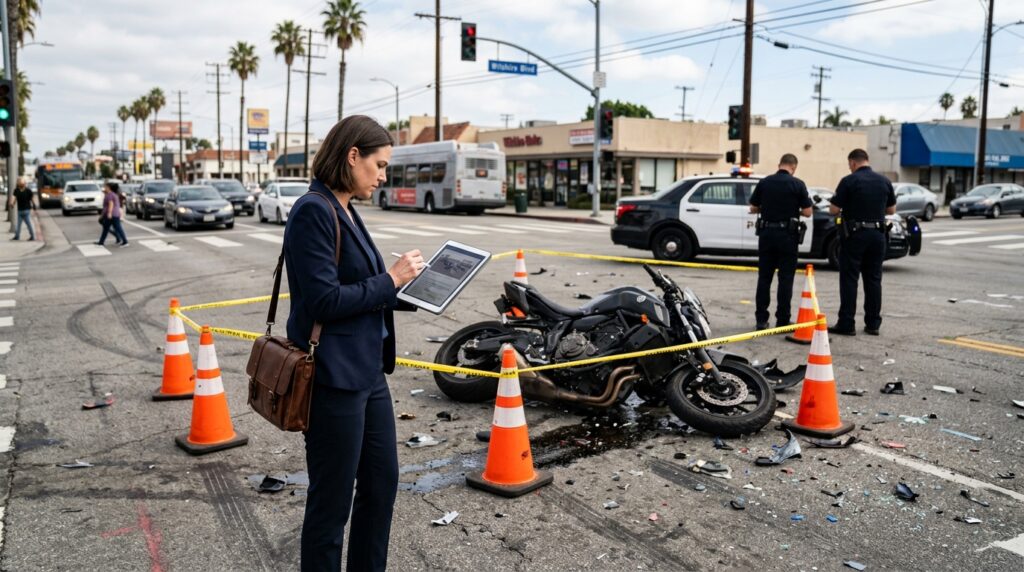
Los Angeles riders face a real risk of hit-and-run crashes, especially in heavy traffic, late-night driving, freeway incidents, parking-lot exits, and intersection collisions. If the driver leaves the scene and cannot be found, the injured rider may need to rely on their own uninsured motorist coverage if available.
That makes early evidence important. Riders should try to identify witnesses, nearby cameras, dashcams, traffic cameras, business surveillance, license plate fragments, vehicle descriptions, and police report details. A small clue can become important if it helps identify the driver or prove that a hit-and-run occurred.
How Insurance Limits Affect Settlement Strategy and Evidence
Insurance limits affect settlement strategy because they define how much may be available from a particular policy. However, limits do not prove fault, injury severity, or claim value. Insurance companies may still dispute liability, argue that the rider was speeding, claim lane splitting was unsafe, question medical treatment, or blame road conditions instead of their insured driver.
This is why evidence matters. Riders should collect photos, videos, police reports, witness information, medical records, repair estimates, helmet-camera footage, GPS records, and insurance letters. The stronger the evidence, the harder it becomes for an insurer to undervalue the claim.
Speed allegations are especially common in motorcycle cases. Even when another driver caused the crash, the insurer may argue the rider was going too fast. Readers can review the site’s guide on speeding motorcycle accidents in Los Angeles to understand how speed disputes can affect fault, settlement value, and legal strategy.
Riders should document both liability and damages
A strong motorcycle accident claim needs proof of two things: who caused the crash and how badly the rider was harmed. Liability evidence may include scene photos, lane position, traffic signal timing, skid marks, debris, vehicle damage, camera footage, witness statements, and police findings. Damage evidence may include emergency records, imaging, doctor notes, therapy records, work restrictions, lost income proof, pain journals, and future treatment estimates.
Los Angeles riders should also document road hazards. Potholes, loose gravel, construction plates, faded lane markings, poor lighting, and debris can contribute to a motorcycle crash or make injuries worse. If road conditions played a role, read the site’s guide on Los Angeles pothole motorcycle accident claims in 2026. Claims involving public agencies can have shorter deadlines, so delay can damage the case.
Electric motorcycle and high-powered e-bike crashes may add another layer of insurance confusion. Vehicle classification, registration, licensing, and insurance coverage can all become disputed. The site’s article on e-motorcycle accidents in Los Angeles is a helpful internal resource for those newer crash scenarios.
Do not accept the first offer without knowing the policy picture
A fast settlement offer may seem helpful when medical bills are arriving, but riders should be careful. The first offer may not account for future treatment, lost income, permanent pain, surgery, reduced mobility, or the full value of the claim. It may also fail to consider whether underinsured motorist coverage or another liable party exists.
Before accepting any settlement, riders should know the available policy limits, the status of medical treatment, the likely future care needs, and whether all responsible parties have been identified. A low settlement can create long-term financial problems if the rider later needs more treatment and has already released the claim.
The California DMV’s official auto insurance requirements page is a useful starting point for understanding minimum liability coverage. However, minimum insurance rules do not tell the full story after a serious motorcycle crash.
The final takeaway is direct. California’s higher auto insurance limits in 2026 may improve some claims, but they do not guarantee fair compensation for injured Los Angeles motorcycle riders. Serious injuries can still exceed minimum coverage. Fault can still be disputed. Insurance companies can still pressure riders into quick settlements. The best protection is preparation: review your own coverage, preserve evidence, get medical care, understand all available policies, and do not sign away rights before knowing the full value of the claim.
Motorcycle riders already face greater physical risk on Los Angeles roads. They should not also face avoidable financial risk because no one explained how insurance limits work. Knowing the numbers before a crash can make a major difference after one.