
Motorcycle dashcam and helmet camera evidence can make a major difference after a Los Angeles motorcycle accident. A crash can happen in seconds, but the dispute over fault may last for months. A driver may say the rider was speeding. An insurer may argue the motorcycle appeared suddenly. A witness may remember only part of what happened. Video can help fill those gaps.
Los Angeles riders face traffic from every direction. Freeways, wide intersections, lane splitting, rideshare stops, delivery vehicles, distracted drivers, and sudden turns can all create risk. When a crash happens, clear footage may show the rider’s lane position, speed range, traffic light, road condition, driver behavior, and impact timing.
In 2026, motorcycle accident claims are no longer built only on police reports and photos. Helmet cameras, motorcycle dashcams, GPS apps, traffic cameras, phone records, and vehicle data can all help explain the crash. The key is preserving that evidence correctly before it disappears.
Why Motorcycle Dashcam and Helmet Camera Evidence Matters
Motorcycle riders often face unfair assumptions after a crash. Some people assume the rider was speeding, weaving, lane splitting incorrectly, or taking unnecessary risks. Those assumptions can affect insurance negotiations, police reports, and settlement discussions.
Video evidence can push back against those assumptions. A front-facing camera may show that the rider stayed in the lane, had the green light, maintained steady speed, or reacted properly. A helmet camera may show what the rider actually saw before impact.
Evidence still needs proper handling. Courts and insurers may ask whether the footage is authentic, complete, and connected to the crash. For legal background, readers can review Cornell Law School’s explanation of Federal Rule of Evidence 901 on authenticating evidence.
Video can show what witnesses miss
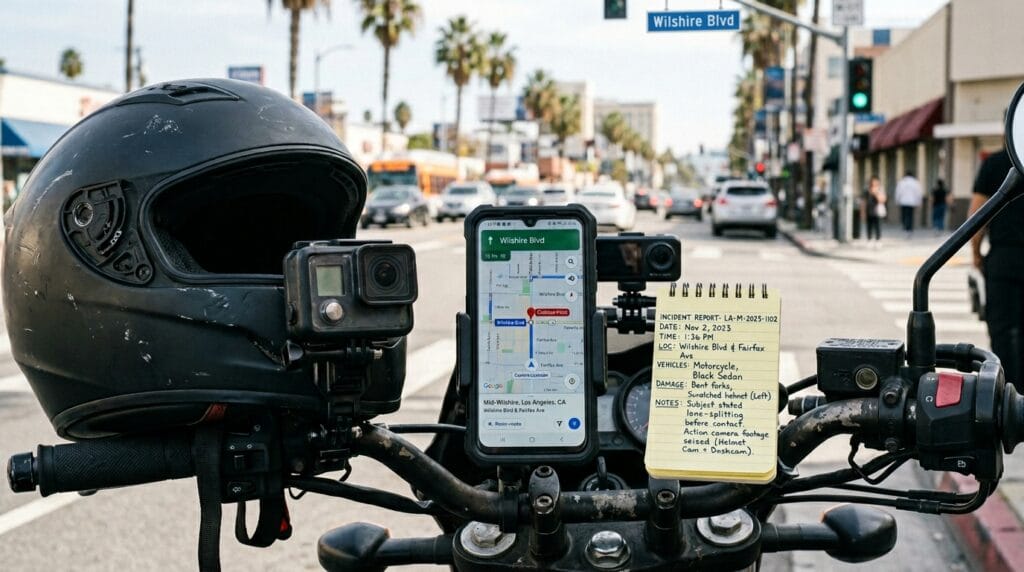
Witnesses can help, but they do not always see the full crash. A person may hear the impact before turning around. Another driver may see only the final seconds. Someone standing nearby may misjudge speed or distance.
A camera can capture details that people miss. It may show the light color, vehicle movement, lane position, road debris, brake timing, or whether the other driver drifted into the rider’s path. In a disputed Los Angeles motorcycle crash, those details can matter.
This topic connects naturally with your article on Motorcycle Safety Awareness Month 2026. Visibility and crash evidence often work together when a driver claims they never saw the rider.
Helmet cameras capture the rider’s perspective
A helmet camera can show the view from the rider’s position. That perspective may explain why the rider braked, changed position, slowed down, or had no safe escape path. It can also show how fast a traffic hazard appeared.
Helmet camera footage may be especially useful in left-turn crashes, lane-change crashes, hit-and-run accidents, road rage incidents, and sudden-door or parking-lot crashes. It gives context that a still photo cannot provide.
Motorcycle dashcams can record the road continuously
A motorcycle dashcam can record the front, rear, or both directions, depending on the setup. Rear-facing footage can help when a driver follows too closely, hits the motorcycle from behind, or changes lanes into the rider.
Continuous recording also matters because riders cannot always start a camera manually before danger appears. A reliable dashcam can preserve the moments before impact without depending on the rider’s reaction.
Video can help fight speed and lane-position disputes
Speed disputes appear often in motorcycle accident claims. An insurer may argue that the rider was traveling too fast, even when the other driver caused the crash. Video may help show traffic flow, lane position, distance, and how quickly the danger developed.
Footage may not always prove an exact speed by itself. However, it can support other evidence, including skid marks, impact damage, traffic camera footage, GPS data, witness statements, and expert analysis.
Your article on speeding motorcycle accidents in Los Angeles fits well here. Speed allegations can reduce claim value if they are not challenged with evidence.
Lane splitting footage can protect riders from unfair blame
California allows lane splitting, but insurers may still use it to blame riders after a crash. Video can help show whether the rider moved carefully, whether traffic was slow, and whether another driver changed lanes without warning.
A camera can also show if the rider had room, used reasonable speed, and reacted to unsafe driver behavior. Your guide on California lane splitting laws is a useful internal link for riders who need more background.
How Los Angeles Riders Can Preserve Video Evidence After a Crash
Getting medical care should always come first after a motorcycle accident. Riders can suffer traumatic brain injuries, fractures, spinal injuries, internal injuries, road rash, shoulder injuries, knee trauma, and nerve damage. Some symptoms appear right away. Others get worse after the shock fades.
Once urgent safety is handled, evidence preservation becomes critical. Cameras can overwrite footage. Batteries can die. Memory cards can get damaged. Phones can be lost. If the rider waits too long, the best evidence may disappear.
Riders should save the original video file as soon as possible. They should avoid editing, trimming, filtering, or posting it online. A clean original file is stronger than a social media upload with missing metadata, comments, or compression.
Save original files, timestamps, and backup copies
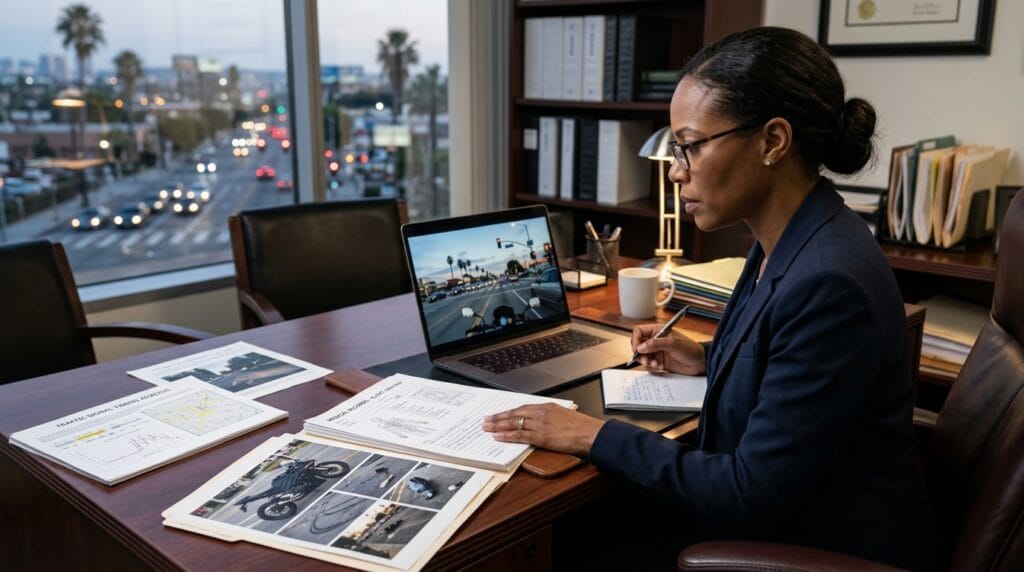
Original files matter because they may include timestamps, file data, GPS information, and recording details. A copy sent through social media may lose quality or metadata. A cropped clip may also create questions about what happened before or after the crash.
The safest approach is to save the original file, create backup copies, and keep the memory card if possible. Riders should also write down the camera brand, model, mounting location, date, time, and whether the camera recorded GPS or audio.
This fits with your article on what to do after a motorcycle accident in California. Early action can protect both medical care and legal evidence.
Do not post crash footage online too early
Posting crash footage online can create problems. Comments, captions, jokes, anger, or speculation may give insurance companies material to use against the rider. A short clip may also leave out important context.
Keep the footage private while the claim is being reviewed. Use it for police reports, insurance claims, attorney review, or official evidence needs. Public attention is not worth weakening the case.
Video should also work with medical evidence. Footage may show a violent impact, but medical records show the harm that followed. Emergency records, imaging results, surgery notes, therapy plans, prescriptions, and work restrictions can help prove damages.
Other digital evidence may help too. GPS apps, phone location data, traffic camera footage, nearby business surveillance, rideshare cameras, and vehicle black box data may support the timeline. Riders should identify nearby cameras quickly because many systems overwrite footage within days.
Hit-and-run crashes especially benefit from camera evidence. A helmet camera or dashcam may capture the fleeing vehicle, license plate, color, direction, or driver behavior. If the other driver leaves the scene, footage may become one of the strongest tools available.
Insurance companies may still challenge motorcycle dashcam and helmet camera evidence. They may argue that the camera angle is misleading, the clip is incomplete, the rider was speeding before the recording began, or the footage does not show injury severity. That is why video should be part of a larger evidence package.
Claim value depends on fault, injury severity, medical bills, lost income, future care, pain, long-term limits, and comparative fault. Your article on how much a motorcycle accident claim is worth in Los Angeles is a useful internal link for riders thinking about compensation.
Riders should also keep practical equipment habits. Use a reliable memory card. Check camera angles before riding. Keep batteries charged. Make sure timestamps are correct. Test footage at night and during daylight. A camera only helps if it captures clear, usable video.
Motorcycle dashcam and helmet camera evidence in 2026 can help Los Angeles riders prove what really happened. It can show visibility, timing, lane position, driver negligence, sudden turns, unsafe lane changes, and crash impact. It can also protect riders from unfair blame.
The bottom line is simple. If you ride with a camera, preserve the footage correctly. Save the original file, avoid online posting, collect witness information, get medical care, and keep all crash records organized. A video clip may not prove everything by itself, but it can become a powerful piece of a stronger motorcycle accident claim.
General information only. This article is for educational purposes and is not legal advice. Motorcycle accident laws, evidence rules, insurance procedures, and filing deadlines vary by case and location. Speak with a licensed attorney about a specific Los Angeles motorcycle accident claim.