
A car door opening into a motorcycle’s path can cause a sudden collision in seconds. The investigation should examine parked vehicle position, visibility and the rider’s route rather than making automatic assumptions.
This guide focuses on the choices readers can verify, the mistakes that create unnecessary risk, and the records or instructions worth checking before they act. Details differ by person, location and equipment or legal setting. Use current primary sources for anything that could change after publication.
Understanding Los Angeles motorcycle dooring accidents before making a decision
Motorcycle dooring accidents often occur near street parking, ride-hail drop-off points and busy commercial corridors. A driver or passenger opens a door just as a motorcycle approaches. The rider may strike the door or swerve into traffic. Both outcomes can create serious injury risk, so the event needs careful reconstruction rather than a simplistic ‘parked car’ description.
A common investigative mistake is focusing only on the open door after vehicles have been moved. The original position of the parked car, nearby marked lanes and direction of traffic may be equally important. Photograph the wider corridor, not just the bent panel. The scene should be documented from lawful, safe public locations without attempting to recreate a dangerous movement.
Identify the facts and limits first
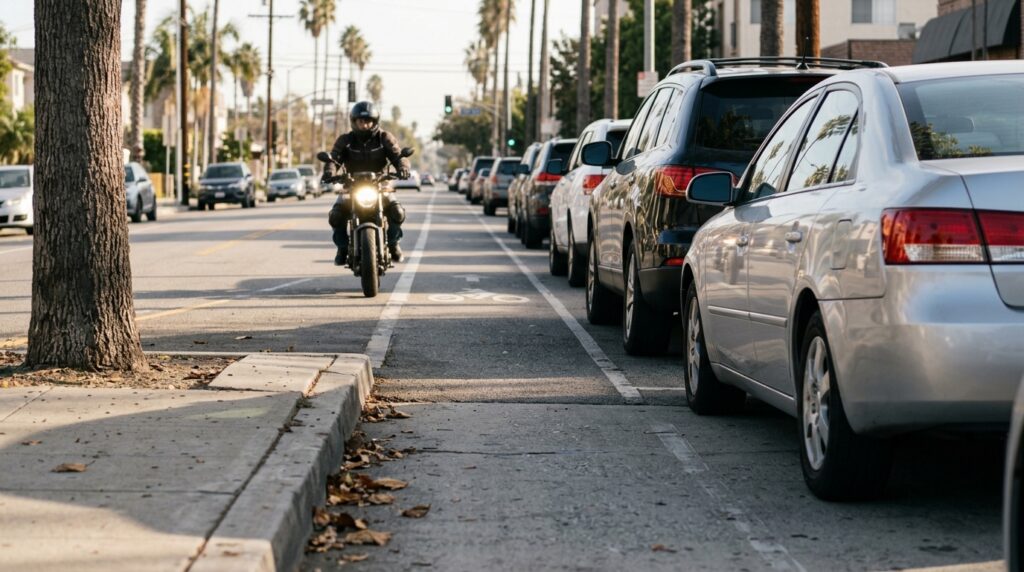
California road users have duties related to opening vehicle doors and using the roadway safely. The exact legal analysis depends on the applicable statute, evidence and surrounding conditions. A passenger’s role may differ from a driver’s, and a parked vehicle may be legally or illegally positioned. Do not assume the car being stationary means no one inside could be responsible.
Street photographs can show curb layout, parking spaces, cycle lanes and sight lines. Capture images from the rider’s approach and from the open-door side when it is safe. Vehicles may move before investigators arrive, so note the original position as accurately as possible without entering traffic to stage photographs.
Photograph door damage and road markings
Door damage and motorcycle contact points may help distinguish a direct impact from an evasive maneuver. Preserve photographs before repairs, and ask insurers about inspection requirements. Do not alter or dispose of damaged gear solely because a claim has not yet been filed. A helmet, jacket or motorcycle component may contain useful information.
The word “dooring” is often associated with bicycles, but a motorcycle can face a similar sudden obstruction at a higher operating speed. The reaction distance, width of the lane and available escape routes may differ. A collision reconstruction should use the actual vehicle dimensions and conditions rather than importing conclusions from another class of road user.
Record independent witnesses and camera locations
Witnesses may have seen the door opening, traffic movement or a preceding stop. Obtain contact information when voluntarily offered and record their words without coaching. Nearby business cameras or parking systems may also hold relevant footage, but retention can be short. Lawful preservation efforts should begin promptly through appropriate channels.
A sudden evasive swerve creates its own evidence questions. If the rider avoided the door but struck another object, there may be no visible contact between motorcycle and car. That does not automatically eliminate a claim, nor does it prove causation. The timing, trajectory, witnesses and any recording become especially important.
Recognize where assumptions break down
Motorcycle lane position is fact-specific. A rider may be traveling lawfully when a door opens, yet a collision can still prompt debate about speed or available clearance. California’s fault system evaluates conduct rather than awarding automatic victory to any road user category. An accurate reconstruction should consider both the door opener’s observation and the rider’s opportunity to react.
Medical care should not wait for an insurance argument. A dooring impact or evasive fall may cause fractures, head injuries, joint damage or delayed symptoms. Obtain appropriate evaluation and follow-up treatment. Keep records of functional limitations and time missed from work while avoiding self-diagnosis or exaggerated descriptions.
Parking and pickup behavior can complicate a case. A car might be legally parked, stopped in a loading zone or double-parked beside traffic. Each situation changes the geometry and possibly the applicable duties. Identify what signs and curb restrictions existed at the time; a later photograph may not capture temporary construction rules or traffic conditions.
Practical steps for Los Angeles motorcycle dooring accidents
Insurance might involve the vehicle owner’s policy, a driver or passenger’s coverage and other policies depending on the actual circumstances. Identifying the correct insurer can require documents beyond the license plate. Ask for written claim information and consult qualified counsel when the coverage picture is disputed.
Parking-lane designs can affect visibility, but a poorly configured roadway alone does not establish public-agency fault. Claims against public entities can involve special requirements and short notice periods. Avoid guessing at liability or deadlines based on general internet advice; a California legal professional can evaluate the specific site and parties.
Evaluate evidence and next steps
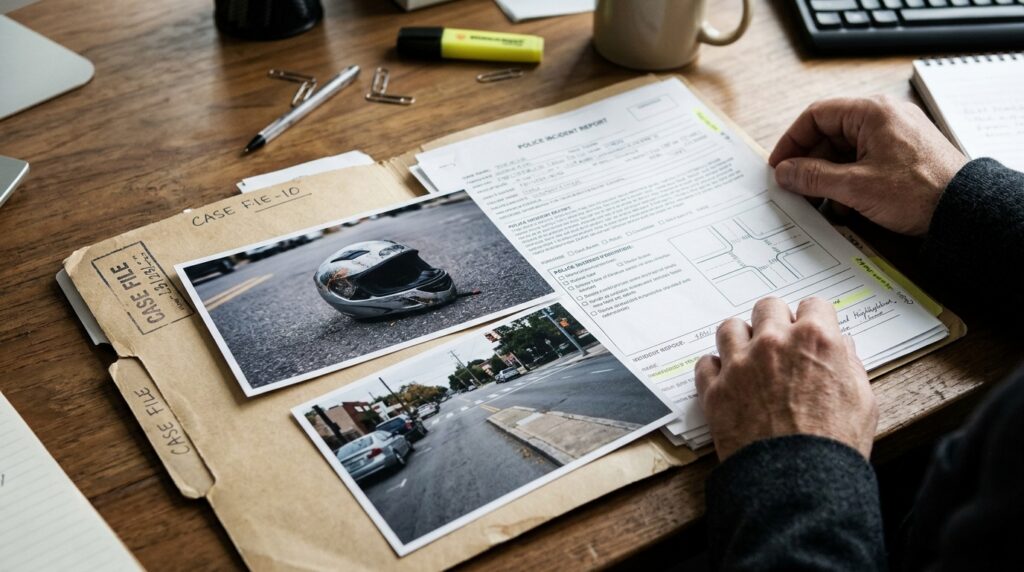
An incident timeline helps preserve the sequence: approach direction, traffic level, parked car location, door movement, rider action and point of rest. Distinguish what the rider remembers from details inferred later. Record lighting, weather and whether other vehicles blocked the view. Those facts can matter more than the dramatic nature of the injuries.
If a rider swerves into another vehicle, the resulting collision may involve additional witnesses and insurers. A full timeline should cover the initial door movement and the secondary impact, not just the final damage. Preserve any video from other road users promptly. A legal professional may need to examine whether the sequence forms one related event or several disputed causes.
Identify vehicle occupants and insurance details
Insurer requests for recorded statements or broad releases should be read carefully. A claimant can seek clarification and legal advice before agreeing to terms that affect rights. A quick initial settlement might not reflect a complete medical evaluation. There is no guaranteed compensation amount for a dooring case.
Review local California claim deadlines promptly
Los Angeles motorcycle dooring accidents require both roadway context and credible evidence. The safest immediate steps are medical care, scene preservation when feasible, identification of involved people and timely legal review. Riders also benefit from defensive scanning near parked cars, although safety advice does not replace accountability when negligence is proven.
Defensive scanning is sensible, but it is not a license to blame every injured motorcyclist. Responsible safety advice can encourage awareness of parked vehicles while recognizing that occupants have duties when opening doors. The claim outcome should be based on evidence and law, not a stereotype that motorcycles are inherently reckless.
Practical checklist:
- Get to safety and seek appropriate medical care
- Photograph door damage and road markings
- Preserve helmet and motorcycle condition evidence
- Record independent witnesses and camera locations
- Identify vehicle occupants and insurance details
- Review local California claim deadlines promptly
Common questions
Can a passenger be involved in a dooring claim? Potentially. The facts and applicable law determine responsibility.
What if the rider never touched the door? An evasive crash may still require investigation; absence of contact does not settle causation.
Is the motorcycle automatically at fault near parked cars? No. Speed, visibility, door opening and roadway duties all matter.
Should damaged riding gear be discarded? Preserve relevant items until professional inspection or claim needs are resolved.
For related context, see the losangelesmotorcycleaccidentattorney.net guide. For authoritative reference, review this primary resource and additional official or technical guidance. Verify updates, dates and jurisdiction before applying general guidance to a specific situation.
Use this guide as a starting framework rather than a promise of a particular outcome. For Los Angeles motorcycle dooring accidents, the most useful next move is to verify the applicable details, preserve accurate information and make a decision based on the real conditions in front of you. When specialist advice, official instructions or a qualified inspection is appropriate, seek that input before a decision becomes difficult to reverse.